- Fiber Facts and Net Carbs July 19, 2012
Fiber Facts:
Dietary fibre is probably best known for its ability to prevent and relieve constipation. But did you know that fibre can also lower your risk of type 2 diabetes, heart disease, and may even protect against colon and rectal cancer?
There are 2 categories of fiber: soluble and insoluble. We need to include both of these into our diets to maintain health.
- Although soluble and insoluble fibre cannot be broken down in your intestines, that doesn't mean you can say fibre doesn't provide any calories.
- Insoluble fibre cannot be absorbed by the body, so it technically does not provide energy (which explains why insoluble fibre calories are not added into the total calories on food labels in the USA. In Canada, however, this is mandatory, which explains why Canadian Quest Nutrition Bars and Fibre 1 Cereal have more calories than identical American versions).
- Soluble fibre, however, is partially fermented in the body, so it can contribute some energy.
- Soluble fibre (e.g. psyllium fibre) dissolves in water to make a gel-like substance. This substance delays the speed at which food passes through your intestines. It also contributes to healthy cholesterol levels and helps regulate blood sugar levels*.
- Insoluble fibre (e.g. wheat bran) is like "roughage". It passes through the digestive system largely unchanged, and increases the speed at which the “bulked” undigested food moves through the large intestine*.
Did you know that a high fibre diet facilitates weight loss? A high fibre diet makes you feel full for a long period of time, which can help minimize overeating.
The American Dietetic Association recommends that adults should consume 20-35g of dietary fibre per day, of which 5 to 10 g should be soluble fibre. It's important you meet your recommended daily fibre intake because this will give you more freedom with your diet. Why? Because insoluble fibre reduces the absorption of sugar and starch, which lessens the glucose-insulin spikes in the bloodstream. It's easy to meet your fibre needs if you eat lots of fruit and vegetables.
Do not exceed the recommended intake of fibre -- otherwise you run the risk of bloating and malabsorption of nutrients. From a bodybuilding perspective, between 40 and 60 grams of fibre a day is acceptable. Do not go beyond 60g/day.
What are Net Carbs?
Not all carbs behave the same way in the body. Understanding the different behaviour of various carbohydrates in your body can help you make healthier food choices. Most carbohydrates are digested by your body and converted into glucose. These are referred to as digestible carbohydrates1. They contribute 4 calories per gram.
However, there are carbohydrates that do not have an impact on your blood-sugar levels. For example, glycerin is digested without being converted into glucose2. I already mentioned that insoluble fibre is not digested in the small intestine, and is not broken down into glucose and absorbed into the bloodstream. Your body eventually excretes insoluble fibre.
- Net carbs refers to the notion of subtracting insoluble fiber from the total carbohydrate count.
- Since insoluble fibre is not converted to blood sugar, this allows you some carbohydrate leeway, meaning you can “cheat” with a few extra carbs in the form of high-fiber foods.
- For example, let's compare 1 conventional crispbread to 1 GG Scandinavian Bran Crispbread. The conventional crispbread contains 10 g of carbs and 2 g of fiber, which means 10g-2g = 8 g of carbs that will actually enter into your bloodstream. The GG Scandinavian Bran Crispbread, however, contains 7.5 g of carbs and 4 g of fibre, which means only 7.5g-4g = 3.5g impact on your blood sugar.
- This means if you opt to eat fiber-rich foods you can benefit your health and get more bang for your carbohydrate buck1.
References:
Continue reading →Fiber Facts: Dietary fibre is probably best known for its ability to prevent and relieve constipation. But did you know that fibre can also lower your risk of type 2 diabetes, heart disease, and may even protect against colon and rectal cancer? There are 2 categories of fiber: soluble and insoluble. We need to include both of these ... - Although soluble and insoluble fibre cannot be broken down in your intestines, that doesn't mean you can say fibre doesn't provide any calories.
- Buddy Lee’s Jump Rope Tips July 8, 2012
Top 10 Reasons to Jump Rope:
- Inexpensive. Only $27.95 compared to a $2000 treadmill.
- Portable: you can travel with your jump rope and jump anywhere!
- Compact: If you don’t have room for a fancy home cardio studio, then jump rope is your answer.
- Time Saver: It burns a lot of calories in a short amount of time. In just 10 minutes of jumping at 120 turns per minute, not only do you accomplish a total body workout, but you also burn 150 calories. In fact, just 10 minutes of nonstop jumping at 120 turns per minute provides the same cardiovascular benefits as 30 minutes of jogging.
- It tones, shapes and strengthens every muscle in your core, as well as your upper and lower body.
- It enhances your dynamic balance, speed, endurance, agility, coordination and concentration.
- It burns fat, improves your cardio-respiratory efficiency an minimizes your risk of developing osteoporosis.
- It is scientifically proven to cause positive mental, physical and physiological changes in the body in as little as 500 jumps or 5 minutes a day.
- Buddy Lee has developed a 4-step system to overcome learning curves and make it easy.
- It’s FUN!
Buddy Lee’s Correct Jump Rope Form:
1. Maintain your balance by looking straight ahead
2. Maintain an upright posture
3. Maintain your weight on the balls of your feet
4. Jump only high enough to clear the rope (1” off the ground)
5. Land lightly on the balls of your feet
6. Keep your elbows near your sides.
7. Maintain your elbow joints at a 45 degree angle
8. When turning the rope, make 2” circles with your wrists.
9. Do not sacrifice good form for speed
How to determine correct rope length:
To determine your correct rope length, place one foot on the center of the rope and pull the handles up the sides of your body. If the handles extend beyond your shoulders, the rope is too long. As you become more proficient at jumping, shortening the rope will increase the rope’s rotational speed and improve your reflexes.

- How to determine correct rope length
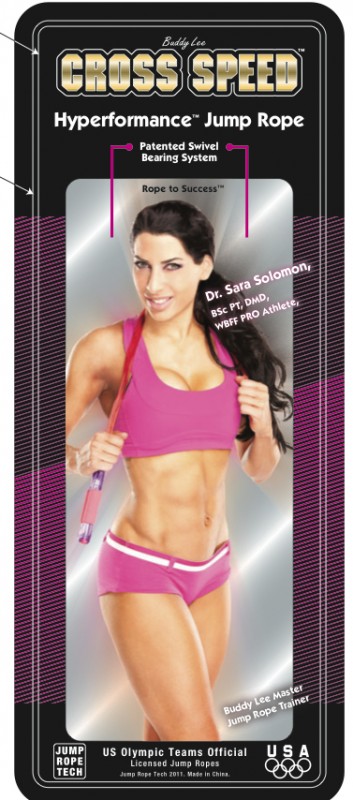
NEW!!! Dr. Sara Solomon Cross Speed
Only $27.95: Click here to get yours in pink or black!

Patented swivel bearing system – turns the rope easily very fast or very slow with a smooth turning motion! This system provides free rotation of the rope cord, with no rope tangle and no rope drag! It will motivate you to learn to jump rope fast, feeling like a pro!
Innovative adjustment – allows the cord to easily be customized to your height in a matter of seconds!
Swivel Bearing Wrench – designed to secure swivel bearings and easily replace them when worn in order to maintain years of high performance!
Replaceable Parts – both cords and swivel bearings are designed for hyperformance rope jumping and are easy to replace!
________________________________________________________________________________________________________________________________________________________
Do Sara's LIVE Jump Rope Workouts:
Learn Buddy Lee's Progressions:
Continue reading →Top 10 Reasons to Jump Rope: Inexpensive. Only $27.95 compared to a $2000 treadmill. Portable: you can travel with your jump rope and jump anywhere! Compact: If you don’t have room for a fancy home cardio studio, then jump rope is your answer. Time Saver: It burns a lot of calories in a short amount of time. In just ...- Dr. Sara Solomon’s Cross Speed Jump Ropes July 6, 2012
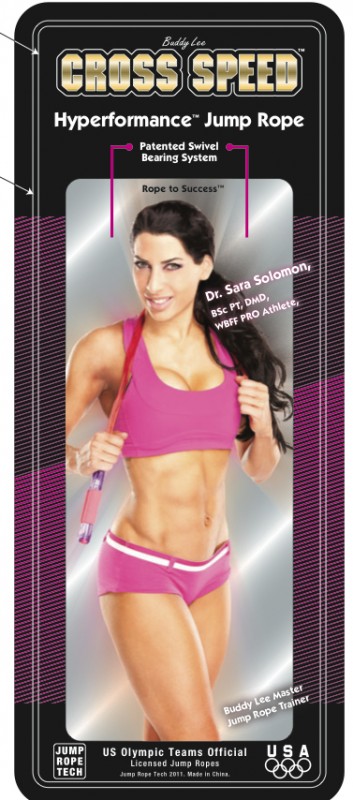
Click here to purchase the jump rope (in pink or black) that Sara uses in her exercise workout videos for only $27.95.
Continue reading →Dr. Sara Solomon Cross Speed by Buddy Lee
As featured in Inside Fitness Magazine and Natural Muscle Magazine $27.95 $27.95 Buddy Lee Cross Speed Dr. Sara Solomon Cross Speed 

Click here to purchase Click here to purchase In hot pink and black design!
Patented swivel bearing system – turns the rope easily very fast or very slow with a smooth turning motion! This system provides free rotation of the rope cord, with no rope tangle and no rope drag! It will motivate you to learn to jump rope fast, feeling like a pro!
Innovative adjustment – allows the cord to easily be customized to your height in a matter of seconds!
Swivel Bearing Wrench – designed to secure swivel bearings and easily replace them when worn in order to maintain years of high performance!
Replaceable Parts – both cords and swivel bearings are designed for hyperformance rope jumping and are easy to replace!
 Click here to purchase the jump rope (in pink or black) that Sara uses in her exercise workout videos for only $27.95. Dr. Sara Solomon Cross Speed by Buddy Lee As featured in Inside Fitness Magazine and Natural Muscle Magazine $27.95 $27.95 Buddy Lee Cross Speed Dr. Sara Solomon Cross Speed Click here to purchase Click here to purchase In hot pink and black design! Patented swivel bearing ...
- Food & Beverages You Thought Were Healthy… but really AREN’T! June 20, 2012
Don't Be Fooled! Learn the Facts!
For years we have been tricked into thinking these foods and beverages are loaded with nutrients. Let’s uncover the culprits and devise some nutrient-dense alternatives!
The Truth about Fat Loss ...
Please understand that no food is going to "facilitate fat loss". If you want to burn fat, then you have to stop eating! Don't freak out! Let me explain.
Food is a mixture of protein, carbs and fat (and as we all know, protein and carbs will spike insulin levels). Therefore, whenever you eat food, your insulin levels go up. Insulin suppresses fat oxidation (i.e. fat burning). So as long as you are eating, then you are storing energy (as glycogen and fat). If you are not eating (i.e. you are fasting), then your insulin levels will go down and you will finally start burning your stored glycogen and fat for energy.
Key Points: You burn fat when you are fasting. You burn your food when you are eating. In order to burn body fat, your insulin levels must be very low. This can be achieved through short-term fasting. Click here to subscribe to my Free Intermittent Fasting Tutorials!
The Truth about "Bad Food" ...
What is a bad food? Well, we've all been told a bad food is unhealthy for us, meaning it's probably high in calories, low in fibre and loaded with sugar, salt, saturated fat, etc.
If you eat a "bad food" one time, you will not instantly pack on 5 pounds. However, if you chronically over-consume bad food (i.e. you follow a "bad diet") and you habitually eat in caloric surplus, then it can lead to nutrient deficiencies, obesity and obesity-related illnesses.
Key Points
- The term “bad food” is a misnomer. No food consumed one time will cause you harm. There are, however, “bad diets”. Make sure you understand the difference between the two.
- You do not have to avoid "bad food" if you eat a variety of nutrient-dense foods while respecting your caloric limits.
On that note, let’s get down to business! And just so you know, I don't demonize the foods on this list. I consume them in moderation because I understand how to factor discretionary calories into my diet without sabotaging my lean physique or my body's micronutrient needs.

Offender #1: GRANOLA
Although high in fibre, granola is also loaded with excess sugar and high fructose corn syrup, both of which are linked to diabetes. If you must indulge in this fattening, high calorie snack, then purchase granola cereal and bars that are low in sugar. This means reading the label is a must! Avoid brands that list sugar as the first ingredient: ideally a whole grain should be listed as the first ingredient. Look for at least 3g of fibre per serving. Do not be seduced by granola bars with sugary fruit filling and chocolate or powdered yogurt coating. A better option is to make your own granola.Sara’s recommendation:
- A bowl of a 1/2 cup of rolled oats with real fruit (1 cup of berries or 1 chopped apple) and cinnamon.
Offender # 2: RICE CAKES:
Although low in calories, rice cakes are devoid of nutrients. They also lack fibre, which makes them a less filling snack. This explains why we tend to binge on them. And to make matters worse, they are a high glycemic index carbohydrate (GI = 82). This means they will spike your insulin, which as we know, promotes fat storage. And if you opt for the flavored versions, then you will also be ingesting sugar and sodium, which, if chronically consumed in excess, is linked to obesity, diabetes, high blood pressure and heart disease. If you absolutely love them and insist on consuming them, then lessen their impact on your blood sugar levels by slathering 2 of them with 1 to 2 TBSP of all-natural zero-sodium nut butter sprinkled with cinnamon.Sara’s recommendation:
- I prefer to use wholegrain rye crispbread in place of rice cakes because they are high in fibre. High-fiber foods take longer to digest and therefore produce a slower rise in blood glucose levels. Rye crispbread has a moderate glycemic index (GI) of 63. Please note that these are not gluten-free. I slather my “chocolate peanut butter” (see recipe in #3) onto 2 pieces of crispbread to further slow the release of glucose into my bloodstream. You can also elect to use other nut butter options such as cashew butter, all-natural peanut butter, almond butter or pumpkin seed butter.
Offender #3: REGULAR and FLAVOURED PEANUT BUTTER
Regular peanut butter contains hydrogenated oils (to prevent oil separation), sugar and salt. And do not be fooled by flavoured peanut butter such as chocolate flavoured peanut butter. The label may read “no hydrogenated oils,” “no trans fats,” “no cholesterol,” and “all natural” but upon examination of the ingredients, you will see it contains a variety of offenders such as evaporated cane juice (which is nothing more than a less refined table sugar) and salt. It's also very hard to exercise restraint with flavoured peanut butter (it's like eating icing, so you may end up eating the entire jar, which is unbelievably high in calories!).Sara’s Recommendations:
- All natural peanut butter (no sodium and no flavouring). Unlike regular peanut butter, all natural peanut butter does not contain hydrogenated oils, trans fats, sugar or salt. They are made solely with peanuts! A freshly opened jar contains a layer of oil on top. I store the jar upside down in my pantry to keep the oil at the bottom. I also stir to blend the oil with the rest of the butter upon opening.
- Instead of purchasing flavoured peanut butter loaded with extra carbs, sodium and sugar, make my “Chocolate Peanut Butter Recipe” which is low carb, low sugar, low sodium and packed with protein! The best part of this recipe is that it prevents you from over-indulging in peanut butter because the mixture with the whey protein not only produces a greater yield, but also promotes satiety. This is a great trick for people with nut butter portion control issues (and I speak from experience: one time I ate half a jar of white chocolate-flavoured peanut butter in under 10 minutes!)
Sara’s Chocolate Peanut Butter Recipe:
- 1 scoop of chocolate flavoured whey protein isolate
- 1 TBSP all natural (sodium-free) peanut butter
- 1/2 tsp of cinnamon
Moisten the mixture with a sparing amount of water until a pudding consistency is achieved with mixing. Eat it as a pudding, or spread it over 2 pieces of wholegrain rye crispbread, use it as a dip for your berries and apples or use it as icing for your healthy baking recipes.
Nutrition Info: Calories: 173, Fat: 8g, Saturated fat: 1g, Cholesterol: 0mg, Sodium 5.1mg, Carbohydrates 4g, Fiber: 1.7g, Sugars: 1g, Protein: 25.1g
Offender #4: LOW FAT FOOD
Fat has become the “new F word” thanks to its bad reputation for causing weight gain. The media and junk food industry try to convince us that eating “fat-free” foods will actually make us thin and healthy. I used to buy into this concept – and was left feeling confused when my daily ritual of eating an entire bag of fat-free licorice made me fat. So exactly why is the North American population getting fatter and fatter while consuming this “low-fat/fat-free” food?Low-fat is a synonym for HIGH SIMPLE CARBOHYDRATES (SUGARS!). Check the labels on low-fat/fat-free foods. Look how high the sugar and carbohydrate levels are! Simple carbohydrates (sugars) spike our insulin levels. This suppresses fat oxidation (i.e. fat burning), making eat easier for dietary fat to be stored whenever you eat in caloric surplus. Remember: Excessive caloric intake of any food is what makes you fat. Key point: Whenever fat is removed from a food product, the only way the company can keep the food palatable is by overcompensating with more sugar, sodium, artificial sweeteners and other questionable chemicals.
Sara’s Recommendation:
- It's okay to include fat in your diet. My top picks are salmon, walnuts, omega-3 eggs, avocado, ground flaxseed and fish oil. Be sure to obey your portions! If you eat more calories than you expend on a daily basis, then all the dietary fat you are eating will be stored as fat! Know your calorie limits and stay within them! Establish your daily calories and macros by using my FREE calorie and macro calculator! p.s. I designed it myself!
- If you are craving fat-free candy such as licorice or jujubes, then opt for low-glycemic index (GI = 29) Goji berries instead. Not only is this superfood packed with protein and fibre, but it is also high in vitamin C, beta-carotene and iron. Because of the low glycemic index, goji berries will not spike your blood sugar levels or lead to energy crashes and sugar cravings the way candy does.
Offender #5: Muffins (including Bran and Low-Fat varieties!)
I decided to research the nutritional information (or in this case, nutrashional information) on a variety of “seemingly healthy” muffins sold in popular coffee shop and bakery chains, and uncovered the following:Calories Fat Cholesterol Sodium Carbohydrates Sugars Fiber Raisin 380 9g 30mg 810mg 67g 32g 5g Low Fat Blueberry 290 2.5g 0 750mg 62g 32g 2g Muffins are notorious for containing between 300 and 600 calories each. They are nothing more than cakes in wrappers! Yes, the bran muffins may be high in fibre, but they are also alarmingly high in sodium, carbohydrates, fat, cholesterol, calories and sugar! Opting for a low-fat muffin instead of a conventional one still overloads your system with the same high levels of sodium, carbohydrates and sugars! What is the message here? As long as the fat levels are low, then the rest doesn’t matter??? I strongly disagree with this nutritionally backwards message for the following reasons:
A) 32 grams of sugar and over 60 grams of carbohydrates!
Did you know that 32g of sugar is equivalent to eating 8 sugar cubes?It’s no secret that chronic excess sugar consumption is implicated in obesity. According to the American Heart Association’s (AHA) report published in the journal Circulation, several studies have linked high sugar intake to insulin resistance, high blood pressure, high triglycerides and type 2 diabetes. To quote Jeff O’Connell, author of Sugar Nation, “Your bloodstream is supposed to contain a teaspoon or so of glucose at any given moment. Tissues begin suffering damage when this small amount rises by even one-fourth... The linings of arteries and capillaries begin suffering damage... High blood pressure, atherosclerosis, and diabetes likely aren’t far behind”.
B) over 750mg of sodium!
Health Canada has set the adequate daily intake of sodium at 1500mg (with an upper tolerable limit of 2300mg). Would you have predicted that over 50% of your daily sodium intake would be in your muffin? Salt is ubiquitous, and thanks to sodium-laced processed and restaurant foods, Canadians are now consuming an average of 3100mg of sodium a day! Excessive sodium intake can cause high blood pressure, which is linked to an increased risk of heart attack, stroke and kidney disease.
Offender #6: SPORTS/ELECTROLYTE DRINKS
Sports drinks were created for high-level athletes who engage in INTENSE exercise in hot outdoor temperatures. A typical 12 oz bottle contains 300 calories, 200mg of sodium, a whopping 78g of carbohydrates and 42g of sugar!!! Unless you need to replenish lost electrolytes because you are competing in an Iron Man in the middle of the Sahara desert, then opt for water. Drinking a sports drink would be the equivalent of swallowing 10.5 sugar cubes, which is heinous! Since the average person’s body will not require this much sugar to fuel a typical workout, you are, in essence, ruining the desired fat-burning outcome of your workout by consuming this beverage. Instead of burning through your glycogen and fat stores during your workout, you are burning your sports drink. You just defeated the entire purpose of your workout! You would have been further ahead staying home and drinking a glass of water while watching your favourite t.v. show! And if that is not enough reason to abstain from sports drinks, then consider this: Sports drinks often contain high fructose corn syrup. According to research presented in the Journal of Hepatology (2008: 48:993-9), high amounts of high fructose corn syrup has been linked to diabetes.
Sara’s recommendation:
- Trade in your high calorie, high carb, high sugar and high sodium sports/electrolyte drinks for water!
Offender #7: Juice, Smoothies, Flavoured Waters
Did you know that flavoured waters, iced teas and juice are typically loaded with excessive sugars, carbohydrates and empty calories? Fruit juice labels often try to disguise their high sugar content by bombarding us with statements such as “contains real fruit juice.” And reconsider drinking 100% real fruit juice because it is high in calories and devoid of fibre.You may be surprised to learn that the fruit smoothies you have been purchasing are often loaded with excessive sugar, carbohydrates, calories and sodium. I decided to research some common restaurant smoothies, and uncovered the following:
Calories Fat Sodium Carbohydrates Sugars Fiber Protein Restaurant Chain Fruit Smoothie 530 7g 180mg 118g 106g 1.9g 5g Yes, you may be getting your daily recommended fruit serving, but not without cost! With nearly 120g of carbohydrates, you are consuming nearly a day’s worth of carbohydrates in one beverage! And do not turn a blind eye to the whopping 106 g of sugar, which is equivalent to eating 26.5 sugar cubes! This exceeds the AHA’s daily-recommended sugar intake of 20g for women by over 5 times! Why are these levels so unreasonably high? Not only do these smoothies contain excessive portion sizes of dairy and fruit, but they also contain added sugars, such as high fructose corn syrup.
Sara’s recommendations:
- Make your own flavoured water by adding some lemon, lime, orange, cucumber or strawberries to your glass of water.
- Trade in your flavoured iced tea for Matcha Green Tea or Oolong Tea. The many purported health benefits of these teas include their potential to fight cancer and heart disease, lower “bad” (LDL) cholesterol, burn fat, prevent diabetes and stroke and even ward off dementia.
- Trade in your fruit juice (which lacks fiber) for real fruit naturally packed with satiating fibre!
- Make homemade fruit smoothies using 8 oz of unsweetened almond milk or water, crushed ice, 1 scoop of a low sugar/low calorie whey isolate protein powder, 1/2 tsp of cinnamon, and 1 serving of low-glycemic index fruit (such as strawberries or blueberries). You can even add a tablespoon or two of ground flaxseed to provide you with fibre and heart-heathy omega-3 fatty acids. This recipe compared to the restaurant brand smoothie has 10 times less sugar, nearly 8 times less carbohydrates, 5 times more protein, 4 times less sodium, 3 times less calories and it will not spike the daylights out of your insulin levels!
Offender #8: Fat-Free Salad Dressing:
Similar to the foods discussed thus far, fat-free salad dressing is also chock-full of extra sodium, sugar and/or high fructose corn syrup.Sara’s Recommendation:
- balsamic vinegar or lemon juice mixed with extra virgin olive oil
- apple cider vinegar
Conclusions:
- You don’t have to demonize "bad food". Remember, everything in moderation. Even moderation in moderation!
- Ensure your daily caloric input does not exceed your daily energy expenditure.
Don’t Be Fooled! Learn the Facts! For years we have been tricked into thinking these foods and beverages are loaded with nutrients. Let’s uncover the culprits and devise some nutrient-dense alternatives! The Truth about Fat Loss … Please understand that no food is going to “facilitate fat loss”. If you want to burn fat, then you have to ...- Low Carb Pizza June 8, 2012
Look I Cook is a Rogers-produced cooking show airing in Ontario, Canada onCityTV (Sundays at 3:30 p.m. EST) and OMNI1 (Fridays at 11:00 p.m. EST).
Stay tuned for Dr. Sara Solomon’s Appearance on Look I Cook on Sunday June 17, 2012 @ 3:30 pm EST on CityTV.
- Sara hilariously demonstrated her delicious and healthy recipes with Ada and Chef Anthony in the comfort of her own kitchen!
Sara's Guilt-Free Pizza:
(Low-Carb/Gluten-Free/Dairy-Free!)
There is no question that pizza is a popular dish all over the world. Many people; however, view it as the "forbidden food", laden with so much saturated fat, cholesterol and sodium. So this raises the question, "how do we create a heart-healthy pizza that is gluten-free, dairy-free, low-carb and low sodium?
Sara has found a solution! The crust is made using extra lean ground white chicken breast and ground flaxseed meal! Although this pizza is dairy-free, it still tastes cheesy because of this secret ingredient: nutritional yeast!
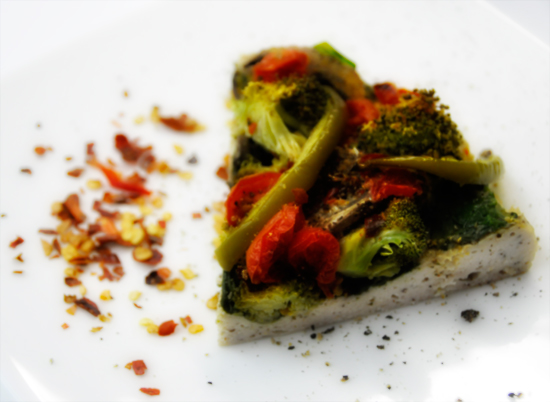
Sara's Low Carb Pizza as Featured on CityTV's "Look I Cook"
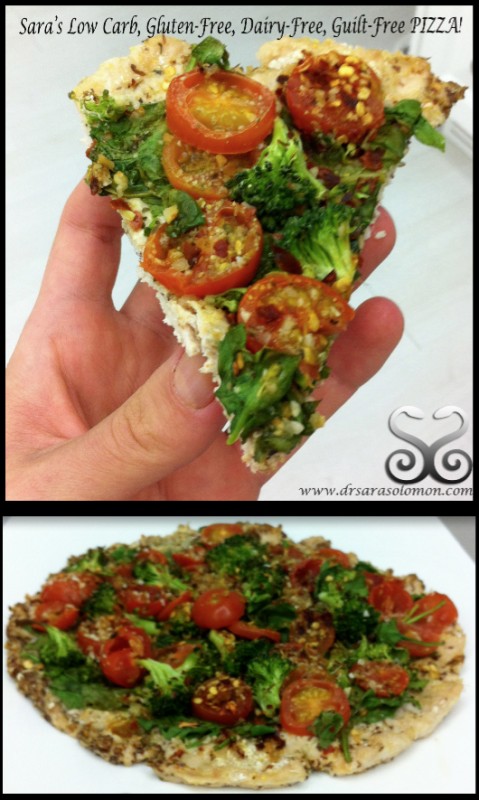
Physique-Friendly Pizza by Dr. Sara Solomon! Featured on CityTV's "Look I Cook"!
Recipe:
- I like to line an oven friendly round pan with aluminum foil. If you prefer, you can use non-stick cooking spray or extra virgin coconut oil.
- combine together and flatten into a crust shape in the pan
- 8 oz of extra lean ground white chicken breast
- 1 TBSP ground flaxseed meal
- season with pepper, salt-free seasoning and/or chili pepper flakes, etc.
- to the crust, add:
- 1 cup chopped spinach
- 1/2 cup broccoli florets
- 1/2 cup sliced cherry tomatoes
- feel free to add your favourite vegetables
- 1 TBSP nutritional yeast
- season with salt-free seasoning, chili pepper flakes, pepper, etc.
- Bake in oven at 350 degrees for 25 min. To make the crust crispy, place the pizza in the toaster oven for 10 min.
- Refrigerate left-overs and toast the next day.
- Serve with a cup of hot Oolong tea!
Nutritional Info:
1 serving = ½ of pizza
flax
tomato
broccoli
spinach
chicken
Nutritional yeast
Total
Calories 15
8
5
3
182
11
225
Fat 1.2 g
.1 g
0
0.1g
11.4 g
0
12.7 g
Saturated Fat 0.15 g
0
0
0
10.3 g
0
10.4 g
Cholesterol 0
0
0
0
85.5mg
0
85.5mg
Sodium 0
2.25 mg
5 mg
11.9 mg
91.2 mg
1.25 mg
111.55 mg
Carbohydrates 1 g
1.75 g
.8 g
0.5 g
0
1.25 g
5.35 g
Fiber 1 g
0.55 g
.5 g
0.3 g
0
1 g
3.4 g
Sugars 0
1.2 g
.3 g
0.1 g
0
0.25 g
1.75 g
Protein .75 g
.4 g
0.5 g
0.4 g
20.5
2 g
24.6 g
Compared to half of a conventional personal pan cheese & pepperoni pizza: 400 calories, 19.5 g fat,, 36 g carbohydrate, 915 mg sodium!!!
Ingredient Information:
- Low Sodium: Sara's Pizza is low in sodium, with one serving containing 111.55 mg of sodium. Compare this to the same portion of a conventional pizza which has 915 mg of sodium! Our bodies only require about 500 mg of sodium a day, but this should be obtained from within natural foods, not added to food in the form of table salt. But beware! Salt is ubiquitous, especially in processed food. Did you know that Canadians consume an average of 3,100 mg of sodium every day, mostly through processed foods? This is why it’s important to stay away from processed foods. Excessive Salt consumption has been linked to health problems including high blood pressure, cardiovascular disease, heart attack, stroke and kidney disease. Health Canada has set the adequate daily intake of sodium at 1500 mg, with an upper tolerable intake of 2300 mg.
- Hot Chili Peppers: Did you know that chili peppers speed up your metabolism and increase fat burning? Capsaicin, the active ingredient in chili peppers responsible for that notorious inferno effect in your mouth, can induce thermogenesis and increase body temperature. By incorporating hot peppers into your meals, you will be able to rev your metabolism and increase fat burning.
- Spinach: Spinach and other dark leafy greens, such as kale are an excellent source of iron (especially important for women), omega-3 fats, vitamin A, and lutein for eye health.
- Broccoli: Did you know that this cruciferous vegetable contains more calcium than a glass of milk? Not only does 1 cup of broccoli provide you with the recommended dietary allowance of immune-supportive vitamin C, but it also contains high levels of folic acid, calcium, vitamin K and B6, potassium, lutein and vitamin A (beta-carotene). As we know, calcium and vitamin K are important for bone health and prevention of osteoporosis. The carotenoid lutein helps prevent macular degeneration and cataracts and may also reduce the risk of atherosclerosis, heart attack and stroke. Broccoli is also high in fiber, which prevents constipation, maintains low blood sugar levels and curbs overeating. Broccoli is rich in a flavonoid called kaempferol, which provides the body with anti-inflammatory benefits. Broccoli contains glucoraphanin, which the body processes into an anti-cancer compound called sulforaphane. Sulforaphane rids the body of a bacterium (H. pylori) that is known to increase the risk of stomach cancer. Lastly, broccoli contains indole-3-carbinol, which is an antioxidant and an anti-carcinogen known to hinder the growth of breast, cervical and prostate cancer. According to a study by researchers at the UCLA Medical Center in California, men and women aged 50 to 74 years who ate broccoli regularly were 50% less likely to develop colorectal cancer than those who did not eat any broccoli.
- Tomatoes: Tomatoes are a rich source of lycopene, a powerful anti-cancer agent. But did you know that lycopene needs fat to be optimally absorbed? Be sure to add a healthy fat to your tomato dishes, such as olive oil.
- Ground Flaxseed: Flaxseeds contains soluble and insoluble fiber, as well as mucilage. Not only does mucilage help protect against bowel cancer, but it also helps stabilize your blood sugar. And fiber, as you know, helps relieve constipation. Ground flaxseed expands up to 5 times when ingested, which means 1 tablespoon added to your morning oats or protein shake will be enough to help you feel full all morning! Note that flaxseeds must be ground in order to be absorbed. Store them in the refrigerator in an airtight container to extend their freshness (they will stay fresh for 3 months).Flaxseeds also contain lignans, which possess anti-cancer, anti-viral, anti-bacterial and antioxidant properties. Flaxseeds are also an amazing source of omega-3 fatty acids and protein.
- Nutritional Yeast: Nutritional yeast, not to be confused with Brewer’s yeast, is an inactive yeast popular amongst vegans because of its cheesy flavour when added to foods. No only does it provide an excellent source of protein and B-vitamins, but it is also low in fat and sodium. Click to purchase:

click for more info
- Extra Virgin Coconut Oil: A Heathy Saturated Fat: Coconut oil, which is popular amongst vegans, is a vegetable fat that is solid at room temperature. It has a sweet coconut flavour, which makes it a great ingredient for baked goods and sautés. It is heat stable, which is why it is well suited for cooking food at high temperatures. In fact, it is the only oil that is stable enough to resist heat-induced damage. Frying oxidizes oils such as extra virgin olive oil and canola oil Vegetable oils such as corn oil, sunflower oil and canola oil are omega-6 vegetable oils. Not only do they contribute to the undesirable imbalance of the omega-6 to 3 ratio, but they also generate toxic chemicals when fried. Not all saturated fats are villains. In fact, medium chain fatty acids, which are found in coconut oil mainly as lauric acid, are linked to increased levels of HDL “good” cholesterol1 and may possibly offer other health benefits such as increased thermogenesis and weight loss. Unlike long chain fatty acids which are predominantly stored as fat, medium chain fatty acids are thought to be health-promoting because they are sent directly to the liver to be burned for energy rather than being stored as fat. Always consult with your physician before adding extra virgin coconut oil to your diet. Click on the photo to purchase extra virgin coconut oil:
- Protein (for our recipe: Extra Lean Ground Chicken – White Breast): According to researchers at the Harvard School of Public Health, protein burns more calories during digestion compared to fat or carbohydrates. This is one reason high protein diets are helpful for fat loss. Another study by Paddon-Jones et al published in the May 2008 issue of the American Journal of Clinical Nutrition found that individuals whose diets contained more protein not only increased thermogenesis (ie. their metabolism), but also increased their satiety and facilitated maintenance of an overall leaner body mass. Ensure you eat a balanced diet consisting of all 3 macronutrients (complex carbohydrates, lean protein and healthy fats), but always include lean protein sources such as fish, skinless chicken breast, eggs, beans, lean beef, turkey or whey at every meal to jump-start your metabolism
- Oolong Tea: Pizza and pop seem to go hand in hand. But did you know that pop contains 40 g of sugar, which is equivalent to eating 10 sugar cubes? So if you do not increase your activity level, then one daily soda will add 15.65 pounds of fat to your body every year! Furthermore, the sugar in regular soda causes cavities and the citric acid and/or phosphoric acid in both diet & regular soda will erode your tooth enamel. Today we have a nation addicted to sugar. People eat about 150 lbs of sugar a year, which is associated with tooth decay and obesity. Obesity is a risk factor for diabetes and heart disease. Oolong Tea: As previously discussed in another episode of Look I Cook, studies suggest drinking matcha green tea can enhance both resting metabolic rate and fat burning, making it a useful addition to any weight loss program. Both green and oolong tea contain catechins. Unlike green tea, oolong tea is partially fermented, which increases the concentration of its polyphenol antioxidants. Polyphenols present in oolong tea help block fat-building enzymes, which prevent the formation of triglycerides. Research has shown that drinking oolong tea throughout the day will raise your metabolism for 2 hours after every cup and increases the caloric burn in your body by 100 calories per day. Another study showed that those who drank 2 cups of oolong tea had 2.5 times the calorie-burning rate of those who drank traditional green tea. Is this a guaranteed weight-loss method? It’s still in the early research stages, but the results are indeed promising for enhancing fat metabolism and controlling obesity.
Photos from the Set:


Sara's Low Carb Pizza as Featured on CityTV's "Look I Cook"
Continue reading →
Sara & Chef Anthony
Look I Cook is a Rogers-produced cooking show airing in Ontario, Canada onCityTV (Sundays at 3:30 p.m. EST) and OMNI1 (Fridays at 11:00 p.m. EST). Stay tuned for Dr. Sara Solomon’s Appearance on Look I Cook on Sunday June 17, 2012 @ 3:30 pm EST on CityTV. Sara hilariously demonstrated her delicious and healthy recipes with Ada and Chef Anthony in ...- Beware of Food Marketing Claims! May 16, 2012
Buyer Beware!
Before I became nutritionally savvyl, I used to be fooled by clever food marketing tactics. Do not be tricked into thinking processed and packaged foods are as "healthy" as they purport to be. Let’s examine some common sneaky labeling tricks used by food manufacturers:
1. “Fat Free”
The media and junk food industry try to convince us that eating “fat-free” foods will actually make us thin and healthy. I used to buy into this concept – and was left feeling confused when my daily ritual of eating fat-free licorice made me fat. So exactly why is the North American population getting fatter and fatter while consuming this “low-fat/fat-free” food?
Low-fat is a synonym for HIGH SIMPLE CARBOHYDRATES (SUGARS!) Check the labels on low-fat/fat-free foods. Look how high the sugar and carbohydrate levels are! Simple carbohydrates (sugars) spike our insulin levels. This suppresses fat oxidation (i.e. fat burning), making eat easier for dietary fat to be stored whenever you eat in caloric surplus. Remember: Excessive caloric intake of any food is what makes you fat.
Key point: Whenever fat is removed from a food product, the only way the company can keep the food palatable is by overcompensating with more sugar, sodium, artificial sweeteners and other questionable chemicals.
2. “Made with Real Fruit”
How many times have you read “Made with Real Fruit” on the packaging of juice boxes, fruit snacks, gummy candies, cereal bars and even toaster pastries? These sugary foods are made with fruit puree. Their high sugar content; however, is not coming from the fruit, but rather from loads of added sugar and high-fructose corn syrup!
You are further ahead buying real fruit (apples, bananas) that provides fibre, vitamins and antioxidants.
RULE: If you want to increase your fruit intake, then buy fruit. If you want candy, then buy candy. Do not confuse the two.
3. “Made with Whole Grains”
Products such as bread, cereal, crackers and potato chips will proclaim themselves to be “multigrain,” “12-grain,” “made with whole grains” or “made with whole wheat.” At a first glance these seem fantastic because we all know that “whole grain” and “whole wheat” provide an excellent source of fibre and is associated with a reduced risk of heart disease, diabetes and digestive problems. But do not assume these labels mean the product is made with 100% whole wheat. For all we know, the food is made with only a “sprinkle” of grains, which may be whole or refined.
RULE: Look for “100% whole wheat." It will be the first ingredient on the package because ingredients are featured in order of quantity, from most to least. And remember that a good source of fiber has at least 3 grams per serving. Minimize consumption of products with refined white flour appearing in the list of ingredients. Note: you don't have to demonize white flour. Click here to learn how to factor discretionary calories into your diet without sabotaging your micronutrition.
4. “Fortified With...” or “A Good Source Of...”
Added nutrients camouflage junk food. Perhaps your toaster pastry has added fibre, but do not overlook its high sugar, salt, high fructose corn syrup and hydrogenated oil content.
The latest trend among food manufacturers is adding fibre to foods such as ice cream, yogurt and even juice. But do not assume all fibre is created equal. The fibre being used in many foods are “purified powders” such as inulin, polydextrose and maltodextrin. According to the Center for Science in the Public Interest, these isolated unnatural fibres are unlikely going to lower your blood cholesterol or blood sugar, and some of them will not even promote regularity. Why purchase pasta made with refined flour and added inulin, when you can purchase 100% whole wheat pasta that contains traditional sources of heart and bowel-friendly fibre?
And perhaps your granola bar is labeled as a “good source of calcium." But did you know that a food product only needs to contain 10% of a specified nutrient to be labeled “a good source of…”? It turns out that eating one granola bar provides you with a mere 8% of your daily recommended amount of calcium. You would be further ahead eating cancer-fighting broccoli, which provides you with more calcium than a glass of milk, as well as fibre, vitamin C, folic acid, calcium, vitamin K and B6, potassium, lutein and vitamin A.
RULE: Despite added omega-3, fibre and vitamins, junk food is still junk food! Buy the real deal instead: 100% whole grains, vegetables, fruits and beans!
Remember: junk food is fine in moderation. Just make sure the overwhelming majority of your daily calories are nutrient-dense and loaded with fibre. The key is not to exceed your daily caloric limits if you don't want to gain fat!
5. Tactics to Disguise Sugar:
Manufacturers will use a combination of different sweeteners to fool you into thinking their products are healthy and low in sugar. They use sweeteners such “organic evaporated sugar cane juice” instead of refined white sugar. Although evaporated sugar cane juice does not undergo the same degree of processing as refined sugar does, it is still SUGAR! The same is true for cane sugar, dextrose, sucrose, corn syrup and high fructose corn syrup. When a product contains multiple types of sweeteners, the total sugar content will not appear on the food label. Instead, it appears as several separate ingredients. Since many consumers do not know terms such as dextrose or sucrose, food companies use this labeling loophole to fool you into thinking their products contain less sugar.
RULE: Sweets don't have to be demonized. You can factor them into your daily discretionary calories, which represent ~10-20% of your total daily calories. Click here to learn how to start flexible dieting today.
Check the list of ingredients before believing the product contains very little sugar. Do not assume the product is "healthy" because the sugar is minimally processed or organic.
6. “Made with Zero Trans Fat”
It is no secret that trans fats increase your risk of coronary heart disease. Studies have demonstrated that trans fats increase your LDL “bad” cholesterol levels and lower HDL “good” cholesterol levels.
Food companies are required to disclose trans fat content on their packaging, which is why so many labels read “Zero Trans Fats!”. The problem is that many companies have replaced trans fats with saturated fats, which are just as responsible for contributing to heart disease!
RULE: Eliminate trans fats from your diet and keep saturated fat intake to a minimum. If you eat a diet high in saturated and trans fats, this will elevate your “bad” LDL cholesterol blood levels, which increases your risk of developing coronary heart disease.
7. “Sodium-Reduced”
In Canada, a company is legally permitted to label a product as “sodium-reduced” as long as the sodium content is reduced by 25%. But oftentimes, 25% is still not enough! Example:
- 1 cup of chicken broth contains 983 mg of sodium.
- 1 cup of “sodium-reduced” chicken broth contains 735 mg of sodium!!!
RULE: Take the label, “sodium-reduced” with a grain of salt, or in this case, a bag of salt. Look for products that state, “no added salt or low in sodium." Remember that we should only be consuming 1500 mg of sodium a day. Unfortunately, Canadians consume closer to 3400mg of sodium daily.
Conclusion:
Before buying food labeled as “healthy,” read the ingredients and nutrition facts to get the whole story. Your best approach is to minimize consumption of processed food. If you want to learn how to factor discretionary calories into your diet without sabotaging your health or fat loss, then please click here to learn my approach to flexible dieting.
For your better health,
Dr. Sara Solomon
Buyer Beware! Before I became nutritionally savvyl, I used to be fooled by clever food marketing tactics. Do not be tricked into thinking processed and packaged foods are as “healthy” as they purport to be. Let’s examine some common sneaky labeling tricks used by food manufacturers: 1. “Fat Free” The media and junk food industry try to ...- Chocolate Avocado Protein Pudding May 3, 2012
Avocado in Dessert?
I know what you are thinking: GROSS!! A dessert made with avocado?? Just trust me on this one.

Recipe (for 1 serving):
1. Slice 1 ripe (ie. mushy) avocado in half, remove the pit. Return the other half of the avocado to the fridge for another day.
2. You can make this recipe by hand or with a blender/food processor. The later option makes it much creamier. Either mash the avocado in the bowl with a fork until it is smooth and creamy or use a blender or food processor. This represents about 1/3 cup of pureed avocado.
3. Add Chocolate Protein Powder: 1 scoop if you want more protein or 1/2 a scoop if you are watching your calories.
4. Add sweetener of your choice. Examples: stevia, Ideal (xylitol & splenda), maple sugar, honey, dates, agave. I use calorie free pancake syrup. Remember to calculate your calories and macros if you use a sweetener with calories.
5. Optional: add cacao powder to make it even more chocolatey. (If you use this, factor it into your calories/macros)
6. Blend. You may need to add a tad bit of water.
7. Enjoy or refrigerate for later. You can use the pudding for frosting or fruit dip.
Nutritional Information:
(for 1 scoop of whey, 1/3 cup puree avocado, calorie free sweetener)
- calories: 273, fat: 14.7 g, saturated fat: 2.6 g, cholesterol: 50mg, sodium: 195.4mg, carbohydrates: 12.5g, fiber: 6.1 g, sugar: 2.5 g, protein: 25. g
Chocolate Avocado Stuffed Strawberries:
I prefer to make the pudding in bulk using a food processor or blender (that way the avocados don't have to be ripe).
I use 5 avocados and I add 5 scoops of chocolate protein powder and a generous amount of calorie free pancake syrup.
This makes 10 servings. I give 5 to my mom and keep 5 for myself. It will last for 5 days in the fridge.
I like to hull 10 strawberries and place them into an ice cube tray. Then I spoon the pudding into the strawberries. Another option is to use a Ziploc bag as a piping bag ... just cut off the corner to create your frosting tip and then pipe the pudding into the hulled strawberries. If you don't have time to hull strawberries, then just dip the strawberries into the pudding.
Here is the nutritional info for this version (i.e. 1/3 cup puree avocado and half a scoop of whey with 10 medium strawberries):
calories: 236, 13.1g fat, 2.1g sat fat, 25mg cholesterol, 234.1mg sodium, 18.7g carbs, 7.5g fibre, 7.9g sugars, 14.3g protein.
Watch the video recipe:
Continue reading →Avocado in Dessert? I know what you are thinking: GROSS!! A dessert made with avocado?? Just trust me on this one. Recipe (for 1 serving): 1. Slice 1 ripe (ie. mushy) avocado in half, remove the pit. Return the other half of the avocado to the fridge for another day. 2. You can make this recipe by hand or ...- Tilapia Sliders Recipe May 3, 2012
TILAPIA.... but reinvented! Perfect for anyone following my Fat Loss Fast System!

Recipe:
Place the following ingredients into a food processor:
- 2 uncooked fresh tilapia cut into small strips (use scissors)
- 2 cups steamed broccoli florets (I buy the florets in the bag you steam in your microwave to save time)
- Salt-free Mrs. Dash
- Pepper
- Squirt half a lime
- 1 TBSP of dehydrated sliced onion (adds flavour and is quicker than slicing an onion and less pungent)
- 1/2 TBSP chopped cilantro (I buy it in the squeezable tubes to save time).
- Blend the ingredients in the food processor.
- Roll into small patties
- Place on griddler (I use Pam non-stick cooking spray) for 10 minutes
- Refrigerate for up to 2 days.
You can enjoy them cold the next day too!
Nutritional Information
for 1 serving of sliders: (4 oz of tilapia and 1 cup (65g) of broccoli florets):
Depending upon the size of your sliders, 1 serving size will be approximately 4-5 sliders (I recommend you weigh your food to ensure your portions are correct)- Calories: 113, fat: 1 g, saturated fat: 0.5g, cholesterol: 55mg, sodium: 60 mg, carbohydrate: 3g, fibre: 2 g, sugar: 1 g, protein: 23 g

TILAPIA…. but reinvented! Perfect for anyone following my Fat Loss Fast System! Recipe: Place the following ingredients into a food processor: 2 uncooked fresh tilapia cut into small strips (use scissors) 2 cups steamed broccoli florets (I buy the florets in the bag you steam in your microwave to save time) Salt-free Mrs. Dash Pepper Squirt half ...- Agave Nectar: Sweet or Dangerous? May 2, 2012
What is Agave Nectar?
Agave nectar is a commercially produced sweetener known to be considerably sweeter than sugar. It is produced from the Blue Agave, which is a large spiky plant that resembles a cactus and thrives in the volcanic soils of Southern Mexico. Agave nectar is made by extracting sap from the core of the plant, which is then filtered and heated at low temperatures to break down the carbohydrates into sugars (fructose).

This gluten-free sweetener first appeared on the market in the 1990s and became touted as a healthy alternative to sugar, honey, maple syrup and artificial sweeteners. It has a diabetic-friendly low glycemic index, because it’s mostly comprised of fructose. Unlike glucose, fructose is processed by the liver, which explains why it does not cause the blood sugar to rise and minimally impacts on insulin (aka “the fat-storing hormone).
One cup of agave nectar contains roughly the same amount of calories as a cup of sugar. Agave nectar, however, is considerably sweeter than sugar, which is why you can use considerably less portions of it to achieve the desired sweetness. In fact, you can use 1/3 of a cup of agave in place of 1 cup of sugar in your dessert recipes, which will dramatically reduce your caloric intake.
Why is Agave Nectar getting a Bad Rap?
Many brands of agave nectar contain fructose levels ranging from 70-97%, which is why it is being declared as “worse than high-fructose corn syrup,” which contains 55% fructose. In fact, agave nectar has the highest fructose content of any commercial sweetener (including sugar, which has 50% fructose) because it is being over-processed (the sap from the plant is being over-boiled, which is how it becomes very sweet). In large quantities, concentrated fructose is very damaging. Continue reading to learn why.
Is Fructose Bad for Me? Unlike glucose, which is distributed into the bloodstream and regulated by insulin, fructose is only processed in the liver. A small amount of fructose, such as that found in fruits and vegetables is not a bad thing because the body’s liver can process it quite well. However, consuming too much fructose at once (ie. consuming foods containing high fructose corn syrup or agave nectar) will overwhelm the liver. Because the liver cannot process the fructose fast enough, it starts making fats (triglycerides) from the fructose, which are then released into the bloodstream. This is unfavourable for the following reasons:
- High levels of blood triglycerides are a risk factor for heart disease.
- Fructose bypasses your appetite signaling system, leaving you hungry and unsatisfied. This is why excess fructose consumption is associated with weight gain.
- Excess fructose consumption may facilitate insulin resistance and eventually type 2 diabetes.
Almost all packaged/processed foods contain added sugar, which typically includes large quantities of fructose.
Take home points:
- Consuming large quantities of fructose increases your risk of heart disease, obesity and type 2 diabetes.
- Minimize intake of processed foods.
- Eat fruits and vegetables.
- Minimize consumption of agave nectars containing large amounts of fructose (ie. 55-75%).
Are All Agave Nectars Bad? No, not all agave nectar should be condemned, but it is imperative you do your research because many brands have added sugars and artificial fillers. And keep in mind that even if the brand of agave nectar is high in fructose (55-97% fructose), you will still be using less of it than compared to sugar (50% fructose).
The manner in which it is processed can affect its nutritional value. Ensure the agave nectar you purchase is processed under 118 degrees F, which allows it to be labeled a raw food. This means it will still possess nutritional value (mineral content) and enzymes.
If you do your homework, you will find agave nectars on the market that are processed below 118 degrees F, contain no artificial fillers, contain less than 50% fructose and have a low glycemic index. An example of one such product is Volcanic Nectars Blue Agave Nectar. But remember that Volcanic Nectar Agave is still a sugar and needs to be consumed in moderation.
What other options exist? A small amount of agave nectar once in a while isn’t going to kill you. Other options include sugar, honey, dates and maple sugar. These types of sugars will have a negative impact on your insulin levels and should be used in moderation. Please click here to learn how to incorporate these types of discretionary calories into your diet without sabotaging your health or physique.
Stevia is a very popular option because it's a NATURAL sweetener. It contains no sugar and unlike artificial sweeteners (eg. Aspartame), it is not derived artificially from chemicals. Rather, it is extracted from the extremely sweet leaves of the stevia plant. Ensure you purchase real stevia extract and not the commercially-sold stevia packets that contain a modified version of stevia. Stevia contains zero calories, zero sugar and will not spike blood sugars! So not only is stevia a guilt-free way to satisfy your sweet tooth, but it is also not going to cause tooth decay. It’s also a great option for diabetics.
For your better health, Dr. Sara Solomon
Continue reading →What is Agave Nectar? Agave nectar is a commercially produced sweetener known to be considerably sweeter than sugar. It is produced from the Blue Agave, which is a large spiky plant that resembles a cactus and thrives in the volcanic soils of Southern Mexico. Agave nectar is made by extracting sap from the core of the ...- NAVIGATING GRIEF: What Grief Does To Your Body, Nervous System & Plans September 6, 2026
On August 31, I lost my beloved Siamese, Coco, after more than 11 years together. This video is about what navigating that loss actually looked like for me, not just emotionally, but physically, and through the lens of the nervous system.
In this vlog, I take you through what happened to my nervous system the day I lost Coco, the grief workout I used the following day, how I knew when to stop, why small everyday actions helped me keep moving, and what happened when reality completely derailed my plans.
CHAPTERS
00:00 Navigating Grief
00:52 Nervous System Crash Course
01:59 The Day I Lost Coco
03:34 The Grief Workout
06:19 Know When to Fold
08:44 You Still Have to Live There
10:10 Reality Doesn’t Care About Your ItineraryWant to train your nervous system with me?
Inside Strength Academy, I teach you how to build the capacity to navigate stress, intensity and recovery through practical nervous system training.
Continue reading →On August 31, I lost my beloved Siamese, Coco, after more than 11 years together. This video is about what navigating that loss actually looked like for me, not just emotionally, but physically, and through the lens of the nervous system. In this vlog, I take you through what happened to my nervous system the day ...- The Problem with Rib Remodelling August 11, 2026
The Problem With Rib Remodelling
Would you pay $15,000 to permanently reshape your ribs for a smaller waist?
A cosmetic procedure known as rib remodelling/rib recontouring is being promoted as a minimally invasive way to create a more “snatched” waist. Rather than removing the ribs, the procedure weakens and repositions the lower ribs, followed by months of corset use while the bones heal and remodel.
Immediately, my physiotherapy brain started asking these questions:
What happens to breathing mechanics? Ribcage mobility? Diaphragm function? Pressure management? The pelvic floor? And what compensations might show up 5, 10 or 20 years later?
In this video, I break down why the rib cage is much more than an aesthetic structure, and why short-term surgical complication rates don’t answer the questions I have about long-term function.
We’ll talk about the relationship between the rib cage, diaphragm, abdominal wall and pelvic floor; what happens to pressure when you cinch the middle of the core canister; chronic inhalation and breathing compensation; and why preserving ribcage mobility matters as we age.
And if what you really want is an hourglass appearance, I also explain how you can build one without permanently altering your rib cage.
Stop chasing. Start building. Become harder to kill.
💚 Free Newsletter
If you enjoy this type of content, join my free newsletter for practical tips on breathing, mobility, strength, nervous system training and building a resilient body.
💜 Join the Strength Academy
The Strength Academy is my online training platform for adults over 40 who want to
• Fix what hurts
• Restore deep core function
• Build strength and mobility
• Improve nervous system capacity
• Learn better breathing and pressure-management strategies during exercise
• Train for long-term performance instead of chasing quick fixes
• Build skills like pull-ups, splits and more
The Problem With Rib Remodelling Would you pay $15,000 to permanently reshape your ribs for a smaller waist? A cosmetic procedure known as rib remodelling/rib recontouring is being promoted as a minimally invasive way to create a more “snatched” waist. Rather than removing the ribs, the procedure weakens and repositions the lower ribs, followed by months of corset use ...- The Skinny Trend Is Back… I’m Refusing to Participate July 28, 2026
The Skinny Trend Is Back… I’m Refusing to Participate
The skinny trend is making a comeback, and with it comes the pressure to shrink ourselves again.
If you’ve started questioning your body because everyone suddenly seems dramatically thinner, you’re not alone.
This video isn’t about judging people who use GLP-1 medications or other medical treatments. Many people genuinely need these therapies, and they can be life-changing when used appropriately.
This conversation is about something different: the growing pressure to chase extreme thinness and treat it as proof of discipline, credibility, or success. I’m choosing not to participate in that cycle.
Watch the video, then join the discussion in the comments: What scorecard are you using for your body now?
Chapters
- 00:00 The Skinny Trend Is Back
- 00:15 Why This Trend Worries Me
- 01:03 What I’m Choosing Instead
- 01:46 A New Scorecard
- 02:45 When Medical Treatment Becomes a Status Symbol
- 03:34 The Question We Should Be Asking
- 04:01 The Nervous System Connection
- 04:41 Capacity Over Aesthetics
💜 FREE NEWSLETTER
If you enjoy this type of content, join my free newsletter for practical tips on breathing, mobility, strength, nervous system training, and building a resilient body.
💜 THE STRENGTH ACADEMY
The Strength Academy is my online training platform designed for adults over 40 who want to:
- Fix what hurts
- Restore deep core function
- Build strength and mobility
- Improve nervous system capacity
- Train for long-term performance instead of chasing quick fixes
Continue reading →The Skinny Trend Is Back… I’m Refusing to Participate The skinny trend is making a comeback, and with it comes the pressure to shrink ourselves again. If you’ve started questioning your body because everyone suddenly seems dramatically thinner, you’re not alone. This video isn’t about judging people who use GLP-1 medications or other medical treatments. Many people genuinely ...- The Hidden Problem with Weighted Vest Walking July 25, 2026
Weighted Vest Walking: The Hidden Problem Nobody Talks About
Wearing a weighted vest during your daily walks may feel disciplined, productive, and “hardcore”… but is it actually helping you build capacity?
In this video, I explain how adding a weighted vest to your 10,000 steps or Zone 2 cardio can change the purpose of the walk entirely. What was supposed to be low-intensity aerobic work may become prolonged, low-grade stress that alters your breathing mechanics, increases the demand on your joints and trunk, and takes longer to recover from.
You’ll learn:
- 0:13 - Why back-heavy vests may pull you into rib flare, anterior pelvic tilt, and lumbar extension
- 0:27 - How pressure can be redirected forward through the abdominal wall or downward toward the pelvic floor
- 0:44 - How weighted walking can interfere with 360-degree rib cage and diaphragm expansion
- 1:40 - Signs that your nervous system is no longer regulated during your walk
- 2:46 - The consequences of repeatedly performing cardio in a dysregulated state
- 3:43 - How to approach Zone 2 cardio
- 4:20 - What about osteoporosis prevention?
- 4:59 - The proper way to approach loaded carries
- 6:03 - Why your training intention matters
There is a time and place for loaded carries, weighted conditioning, and high-intensity training. But sometimes the smartest thing you can do is let walking be walking.
And remember: You’re either hunting your workout… or it’s hunting you.
If every workout leaves you feeling hunted, depleted, and unable to recover, you may be reinforcing chronic survival instead of building capacity.
Ready to Address the Mechanics Underneath the Problem?
Fix Your Upper Body is my complete 24-week follow-along program designed to improve breathing mechanics, rib cage mobility, thoracic mobility, scapular function, upper-body strength, and overhead mobility... without guesswork.
It also includes an extensive cardio section where I teach you how to train with your nervous system instead of against it.
For more details 👉 Fix Your Upper Body
Prefer Access to Everything?
Join my Strength Academy to access my complete library of breathing, mobility, strength, core, flexibility, and nervous system training programs.
As a member, you’ll also receive:
- ✅ Two live Zoom workouts with me every month
- ✅ Coaching and mentorship inside my private community
- ✅ Hundreds of follow-along workouts and progressive training plans
- ✅ Access to all of my programs
For more details 👉 Strength Academy:
Weighted Vest Walking: The Hidden Problem Nobody Talks About Wearing a weighted vest during your daily walks may feel disciplined, productive, and “hardcore”… but is it actually helping you build capacity? In this video, I explain how adding a weighted vest to your 10,000 steps or Zone 2 cardio can change the purpose of the walk entirely. ...- Stop Hanging Like This: You’re Hurting Your Shoulders July 17, 2026
Stop Hanging Like This: You're Hurting Your Shoulders
You’ve probably heard that hanging from a bar is one of the best exercises for healthy aging.
And it’s true.
Grip strength has been associated with longevity, muscle mass, and overall health. But here’s what almost nobody teaches…
What are your shoulders actually supposed to be doing while you hang?
Should they be:
- Depressed?
- Elevated?
- Internally rotated?
- Externally rotated?
Getting this wrong can make hanging uncomfortable, irritate your shoulders, and make it much harder to build your hang time.
In this lesson, I’ll show you exactly how I teach hanging mechanics so you can:
- Hang more comfortably
- Build stronger shoulders
- Improve overhead mobility
- Increase your hang time without irritating your joints
Whether you’re just starting or you’ve been hanging for years, small changes in shoulder position can make a huge difference.
What You’ll Learn
- Why grip strength matters for healthy aging
- How to scale bar hangs for your current ability
- The “shoulder wrap” that most people never learn
- Common bar hang mistakes
- Why internal shoulder rotation can lead to discomfort
- Follow-along hanging practice
- Progressions to help you build hang time safely
Video Chapters
- 00:00 - Why care?
- 01:04 - How to scale bar hangs
- 02:02 - The shoulder wrap (IMPORTANT!)
- 03:54 - Bar Hang Do’s & Don’ts
- 04:20 - Consequences of internal rotation
- 05:44 - Real-time bar hang workout
- 08:13 - Progressions
- 08:43 - Take the next step
Train With Me
If you enjoy my teaching style and follow-along workouts, you’ll love the Strength Academy.
Inside you’ll find structured programs for:
- Breathing & Core Training
- Mobility
- Strength
- Pull-Ups
- Stomach Vacuums & Nauli Kriya
- Splits
- Backbending
- Pistols
- Fix Your Upper Body (the program this lesson comes from )
- Pelvic Floor & Core Training
Plus you’ll receive:
- Two live Zoom workouts with me every month
- Coaching and mentorship inside my private community
- Hundreds of follow-along workouts and progressive training plans
Want Lifetime Access?
This lesson comes from my Fix Your Upper Body program.
If you’re dealing with:
- Shoulder pain
- Elbow pain
- Wrist pain
- Neck pain
- Tight shoulders
- Poor overhead mobility
- Pain while hanging
- Pain while pressing overhead
- Pain while reaching overhead
this program provides structured follow-along workouts and progressive programming to help restore shoulder mechanics, improve movement quality, and build lasting strength and mobility.
👉 Learn more about the Fix Your Upper Body Program
Continue reading →Stop Hanging Like This: You’re Hurting Your Shoulders You’ve probably heard that hanging from a bar is one of the best exercises for healthy aging. And it’s true. Grip strength has been associated with longevity, muscle mass, and overall health. But here’s what almost nobody teaches… What are your shoulders actually supposed to be doing while you hang? Should they ...- Fix Upper Ab Gripping for a Flatter Lower Belly July 13, 2026
Fix Upper Ab Gripping for a Flatter Lower Belly
Do you have a lower belly pooch?
One possible contributor is upper ab gripping.
In this follow-along routine, I’ll show you how excessive upper abdominal tension can interfere with healthy breathing mechanics, pressure distribution, deep core coordination, and pelvic floor function. Then I’ll guide you through simple exercises to help you relax the abdominal wall, reconnect with your lower abdominals, and improve rib cage mobility.
In this video you’ll learn:
- ✔ What upper ab gripping is
- ✔ Why it may contribute to lower belly pooching
- ✔ How pressure should be distributed during healthy 360° breathing
- ✔ A follow-along routine to improve breathing, abdominal coordination, and rib cage mobility
Exercises included:
- HA Breathing - 3:56
- Lower Abs Challenge - 8:32
- Quadruped Lower Ab Activation - 11:52
- Thoracic Rotation - 14:04
- Lateral Breathing Pull-Down - 16:24
- Pec Minor Breathing Opener - 21:35
Remember, upper ab gripping is just one possible contributor to lower belly pooching. Every body is different, and this routine is designed to help you explore whether this movement pattern is part of your own picture.
Train With Me
If you enjoy my teaching style and follow-along workouts, you’ll love my Strength Academy.
Inside you’ll find structured programs for:
- Breathing & Core Training
- Mobility
- Strength
- Pull-Ups
- Stomach Vacuums & Nauli Kriya
- Splits
- Backbending
- Pistols
- Upper Body Foundations
- Pelvic Floor & Core Training
- …and much more.
As a member, you’ll also receive:
- ✅ Two live Zoom workouts with me every month
- ✅ Coaching and mentorship inside my private community
- ✅ Hundreds of follow-along workouts and progressive training plans
👉 Join the Strength Academy here
Continue reading →Fix Upper Ab Gripping for a Flatter Lower Belly Do you have a lower belly pooch? One possible contributor is upper ab gripping. In this follow-along routine, I’ll show you how excessive upper abdominal tension can interfere with healthy breathing mechanics, pressure distribution, deep core coordination, and pelvic floor function. Then I’ll guide you through simple exercises ...- Stiff Rib Cage? Tight Back? Try This 360 Breathing Routine July 1, 2026
Stiff Rib Cage? Tight Back?
Stiff rib cage? Tight back? Can’t seem to breathe into your sides or back?
In this follow-along breathing routine, I’ll coach you through exercises designed to improve rib cage mobility, torso expansion, and pressure management.
When your rib cage and torso become stiff, your body starts compensating. That can contribute to abdominal distension, lower belly pooching, neck tension, shoulder problems, poor overhead mobility, pelvic floor symptoms (leaks, heaviness), and reduced core stability.
Unlike most breathing videos, this is a complete follow-along workout. You won’t have to pause the video or figure it out on your own: I coach you through the entire session from start to finish.
This video comes from my "Fix Your Upper Body" program. You can get the Fix Your Upper Body program as a standalone program with lifetime access, or it’s included with an active Strength Academy membership, where you’ll also get access to my complete library of follow-along workout programs.
Continue reading →Stiff Rib Cage? Tight Back? Stiff rib cage? Tight back? Can’t seem to breathe into your sides or back? In this follow-along breathing routine, I’ll coach you through exercises designed to improve rib cage mobility, torso expansion, and pressure management. When your rib cage and torso become stiff, your body starts compensating. That can contribute to abdominal distension, ...- Calorie & Macro Calculator November 18, 2025
Continue reading →JOIN THE STRENGTH ACADEMY
 Calculator Dr. Sara Solomon July 26, 2014 Calculator 45 Comments I designed this Calorie and Macro Calculator to work perfectly with my Fat Loss Fast System, which I’ve since retired. My focus shifted to my Strength Academy (movement and nervous system training). However, for those who previously purchased the Fat Loss Fast System e-Book and still want to use my custom calculator, ...
- Unlock Tight Adductors | 45-Min Follow-Along Routine for Middle Splits August 9, 2025
Unlock Tight Adductors | 45-Min Follow-Along Routine
If your hips feel janky… you’ve got tight inner thighs, cranky glutes, or low back tension, this routine is your fix. We’re going after the root cause of adductor tightness by getting your glutes, abs, and inner thighs to play nice so your hips actually feel supported. This will help you ultimately unlock the middle splits!
This routine is straight from my NEWLY UPDATED Splits Program. You can get it as a standalone program with lifetime access, or it’s included with an active Strength Academy membership, where you’ll also get access to my complete library of programs.
The Strength Academy has:
✅ All my programs (splits, fix your upper body, core challenges, 360 breathing, nauli kriya, pull-ups, pistols and more)
✅ Follow-along videos ... just press play
✅ Simple day-by-day training plans
✅ My mentorship and live workouts
Equipment Needed:
- 2 yoga blocks
- Foam roller
- Glide discs (or towels)
- Chair
- Wall
- Massage ball
- Stool
- Booty band (mini band)
Exercises in This Routine:
- Butterfly Position Adductor Release (Inner Thigh Mobility)
- Glute Medius Wall Release (Hip Stability Prep)
- TFL & Quad Foam Rolling
- Deep Squat Breathing (360 Diaphragm Expansion)
- Abdominal Brace with Heel Slide Level 1 & 2 (Core Control)
- Glute Medius Hip Dips ... Push More Than You Pull Challenge
- Airplanes: Chair-Assisted (Hip Rotation Control)
- Side Lunges ...Push vs. Pull for Glutes & Adductors
- Side Planks with Abductor Activation (Lateral Hip Strength)
- Glute Bridge Progressions: Regular, Marching, Butterfly (Build Glute Power)
- Hamstring Bridge on Foam Roller: Bilateral & Unilateral Holds (Hamstring & Core Activation)
- Standing Hip CARs & Straight Leg Hip Abductions (Hip Joint Control)
- Frog Pose Rocks + Internal Rotation Lifts (Groin Mobility)
- Middle Splits
- Happy Baby Breathing (Cool-Down & Hip Reset)
Continue reading →Unlock Tight Adductors | 45-Min Follow-Along Routine If your hips feel janky… you’ve got tight inner thighs, cranky glutes, or low back tension, this routine is your fix. We’re going after the root cause of adductor tightness by getting your glutes, abs, and inner thighs to play nice so your hips actually feel supported. This will ...- The 3 Diaphragm Secret to Ending Pain June 19, 2025
Why You Should Stack Your 3 Diaphragms Like Pancakes
Most people have no idea their three diaphragms are meant to be stacked like pancakes 🥞 for optimal function.
- Vocal diaphragm
- Respiratory diaphragm
- Pelvic floor diaphragm
But when your rib cage and pelvis lose alignment, everything falls apart. That’s when you start noticing:
❌ Pain
❌ Injuries
❌ Stalled progress (despite all your effort)
Why You Should Stack Your 3 Diaphragms Like Pancakes
Why You Should Stack Your 3 Diaphragms Like Pancakes
The first step is rebuilding your system from the inside out—starting with breathing mechanics.That’s why all my students start with my breathing programs inside my Strength Academy.
Why You Should Stack Your 3 Diaphragms Like Pancakes
Once you’ve built awareness, it’s time to level up with practices like Stomach Vacuum & Nauli Kriya.
✅ Pressure management
✅ Nervous system regulation
✅ Internal core strength and control you can actually feelYou can find the Stomach Vacuum/Nauli Kriya Program and many more inside my Strength Academy, or grab it à la carte.
🔗 Click here to explore all programs
Why You Should Stack Your 3 Diaphragms Like Pancakes Most people have no idea their three diaphragms are meant to be stacked like pancakes 🥞 for optimal function. Vocal diaphragm Respiratory diaphragm Pelvic floor diaphragm But when your rib cage and pelvis lose alignment, everything falls apart. That’s when you start noticing:❌ Pain❌ Injuries❌ Stalled progress (despite all your effort) Why You Should Stack ...- 2-Ingredient Banana Ice Cream (Ninja Creami Recipe) May 25, 2025
🧠 NEW THOUGHT:
I made ice cream using only bananas.
Because apparently that’s a thing now.
And no, this isn’t a prank.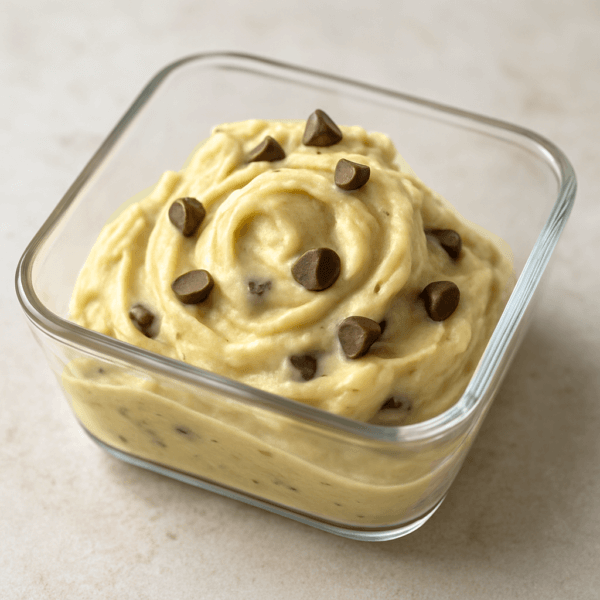
📦 Ingredients:
- 2 very ripe bananas, mashed
- That’s it. I don’t know how to make this any easier.
- Optional: dark chocolate chips, walnuts, cinnamon, protein powder—whatever blows your skirt up
👩🏻🍳 Instructions:
-
Buy a Ninja Creami.
(🇨🇦CAD link + 🇺🇸US link)
I like the old-school model—it fits on my counter (unlike the newer Ninja Creami monstrosities). Plus, it’s simpler to operate and way more affordable. Cleanup? Easy. -
Mash 2 ripe bananas with a fork.
-
Smush the banana sludge into your Ninja Creami pint.
-
Freeze for 24 hours. Or three weeks. Time is fake.
-
Remove from freezer and run under hot water for 90 seconds.
-
Spin on “Lite Ice Cream” mode.
If it comes out like banana dust particles, hit “Re-spin.” -
Optional: Add chocolate chips and press “Mix-In.”
(I prefer it without—no crunchy interruptions in my joy.) -
Serve and enjoy.
🎬 Watch Me Make It
⚡️ Nutrition Info (Whole Recipe – 2 Bananas):
Calories: ~210, Fat: ~0.6g, Carbs: ~54g, Fiber: ~6g, Sugar: ~28g (naturally occurring), Protein: ~2.6g
Hydrating. Chewable. Emotionally grounding.
❄️ Don’t Have a Ninja Creami? Try These Instead:
- Freeze mashed banana in popsicle molds
- Blend frozen banana chunks in a Vitamix or food processor
- Freeze it in an ice cube tray, blend when ready
- Or just eat mashed banana cold and call it “deconstructed gelato” 😏
🥹 Real Talk:
I don’t think eating two bananas is the end of the world.
But if you’re worried about carbs—save it for date night and share it with someone who respects snacks.
💥 Want Abs Under Your Sweatsuit?
Don’t be fooled by the full-body sweatsuit…
Look what’s underneath. 😏
You don’t need a $150 appliance for that.
You need my Core Challenge—
No crunches. No BS. Just the real stuff:
TVA engagement, pressure management, posture gains, cats optional.
🧠 NEW THOUGHT: I made ice cream using only bananas.Because apparently that’s a thing now.And no, this isn’t a prank. 📦 Ingredients: 2 very ripe bananas, mashed That’s it. I don’t know how to make this any easier. Optional: dark chocolate chips, walnuts, cinnamon, protein powder—whatever blows your skirt up 👩🏻🍳 Instructions: Buy a Ninja Creami.(🇨🇦CAD link + 🇺🇸US link)I like the ...- Peanut Butter Banana Greek Yogurt Bark April 6, 2025
Do you think Plain Greek yogurt tastes gross-a-losse? Then make THIS!
Are you still buying those sketchy sugary flavoured yogurts? It’s time for an upgrade.
This frozen bark is made with real ingredients you actually recognize—no sketchy additives, no artificial sweeteners.
It’s creamy, chocolatey, peanut buttery, and naturally sweet from ripe banana.
Plus, it’s freezer-friendly and makes portion control a breeze.

🛒 Ingredients
-
5 x 100g containers (500g total) of 2% Plain Greek Yogurt (My boyfriend advised me the bark was too sour and needs less yogurt. Now that I have a ton of "bark experience", I suggest you use 3 containers ...it's much tastier).
-
2 heaping tablespoons (3 TBSP) of all natural peanut butter
-
1 ripe banana, mashed
-
1 ripe banana, sliced thinly
-
1 square (about 25g) of Alter Eco 90% dark chocolate, melted. Here’s where I buy it in Canada.
🥣 Instructions
-
In a mixing bowl, combine:
-
Greek yogurt
-
Natural peanut butter
-
Mashed banana
Stir until smooth and creamy.
-
-
Line a cookie sheet with parchment paper. Pour the yogurt mixture on top and spread evenly into a flat layer. The thinner, the better (make it as thin as a bat's ear! lol).
-
Top with thinly sliced banana pieces.
-
Drizzle melted dark chocolate over everything.
-
Place the tray in the freezer for 4 hours, or until solid.
-
Once frozen, break into bark-style pieces with your hands.
-
Enjoy immediately, and store the rest in a freezer-safe container for an easy grab-and-go snack.
WATCH THE VIDEO
⚡️Nutrition Info:
-
Full Recipe: 990 calories | 31.2g fat | 79.1g carbs (8g fiber, 37.5g sugar) | 60.7g protein
Per 1/8th: ~124 calories | ~3.9g fat | ~9.9g carbs (1g fiber, 4.7g sugar) | ~7.6g protein
Note: These values are estimates and will vary depending on the exact brands & portions used.
🤓 Why You’ll Love It
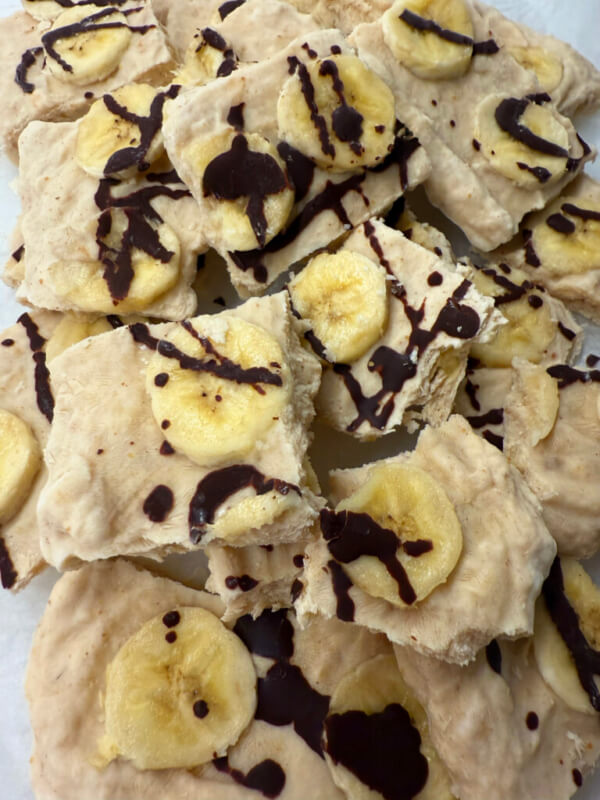
-
Naturally sweet, no added sugar (besides what's in the chocolate)
-
Protein-packed and super satisfying
-
No weird thickeners or fake flavours
-
Customizable: Add nuts, seeds, berries, protein powder or swap PB for almond butter
-
Great post-workout snack or bedtime treat
🤓 Want to Go Beyond Snack Hacks?

My Core Challenge is a no-fluff program to help you
✅ connect with your core,
✅ get stronger,
✅ and maybe even stop peeing a little when you laugh.
(No crunches. No BS. Just results.)
🧊 How to Make Banana Bark in Bulk (Even If Your Freezer Is Tiny)
Okay, so you fell in love with the banana bark. But now you’re annoyed that you have to make it every three days because your freezer can barely fit one tray without staging a revolt.
Welcome to my life.
But fear not — I found these cheap plastic thingamajiggies from Amazon that lets me stack three trays on top of each other. That’s right. We’re talking Freezer Tetris: Pro Edition.
Do they look janky? Yes.
Do they work? Surprisingly, also yes.
Do I feel like a snack-stacking ninja now? Absolutely.Here’s the link to the magical freezer tray stackers I bought:
- 👉 Canada Link
- 👉 USA Link
You’re welcome. 🤪
Continue reading →Do you think Plain Greek yogurt tastes gross-a-losse? Then make THIS! Are you still buying those sketchy sugary flavoured yogurts? It’s time for an upgrade. This frozen bark is made with real ingredients you actually recognize—no sketchy additives, no artificial sweeteners. It’s creamy, chocolatey, peanut buttery, and naturally sweet from ripe banana. Plus, it’s freezer-friendly and makes portion control a breeze. 🛒 Ingredients 5 x ...- Hip Mobility for Better Sex (10-Minute Routine) February 14, 2025
Unlock hip mobility for activities on and off the mat. 😈
This 10-minute hip mobility routine is designed to:
- Unlock tight hips for effortless movement
- Boost stamina & control 😏
- Improve flexibility & pelvic floor connection
- Help you connect to your body & feel amazing
This routine is straight from my NEWLY UPDATED Splits Program. You can get it as a standalone program with lifetime access, or it’s included with an active Strength Academy membership, where you’ll also get access to my complete library of programs.
Breathe, move, and feel the difference. The more control you have over your hips, the more freedom you have in your movement... and that applies everywhere. 😘
Continue reading →Unlock hip mobility for activities on and off the mat. 😈 This 10-minute hip mobility routine is designed to: Unlock tight hips for effortless movement Boost stamina & control 😏 Improve flexibility & pelvic floor connection Help you connect to your body & feel amazing This routine is straight from my NEWLY UPDATED Splits Program. You can get it as a standalone program with ...- 10-Minute Beginner Core Workout to Build Strength & Ditch Pain January 17, 2025
Start your core journey with this beginner-friendly workout designed to reduce pain and build strength... all in just 10 minutes! Whether you’re easing back into fitness or looking for a no-fuss solution to improve your core stability, this workout has you covered.
💻 This workout is part of my NEW Core Challenge!
Today’s Workout: Core Stability Routine
- Objective: Build core stability & control.
- Equipment: Chair
Circuit (2 rounds):
- 1️⃣ Supine Alternating Dead Bugs: 16 alternating leg lifts
- 2️⃣ Side Plank (using chair): 50 seconds/side
- 3️⃣ Bird Dogs: 4 alternating arm lifts, 4 alternating leg lifts, 8 alternating contralateral lifts 🎯
Why This Workout Works:
- ✔ Strengthen your core from the inside out
- ✔ Reduce pain and improve functional movement
- ✔ Perfect for all fitness levels
What’s the Core Challenge?
- ✅ 10 minutes a day
- ✅ 5 days a week, for 3 weeks
- ✅ Beginner, intermediate, and advanced levels welcome!
- ✅ Follow-Along Video Workouts
- ✅ Lifetime Access: Keep the workouts forever!
- ✅ Join the exclusive Facebook group for support, prizes, and extra motivation!
What You’ll Gain in 3 Weeks:
- ✔ Say goodbye to back pain
- ✔ Build a stronger, more stable core
- ✔ Sculpt a smaller waistline
- ✔ Finally touch your toes
- ✔ Boost your athleticism
- ✔ Get back in the game!
Click the link to join the Core Challenge today!
Continue reading →Start your core journey with this beginner-friendly workout designed to reduce pain and build strength… all in just 10 minutes! Whether you’re easing back into fitness or looking for a no-fuss solution to improve your core stability, this workout has you covered. 💻 This workout is part of my NEW Core Challenge! Today’s Workout: Core Stability Routine Objective: ...- Fix Stiff Upper Back in Your Chair! December 19, 2024
Does sitting at your desk leave your upper back feeling stiff and your chest tight? 😣
Try these two quick chair exercises to loosen up and feel amazing in just a few minutes! 🙌
✨ Exercise 1: Thoracic Extension Over a Chair: 5-10 reps
✨ Exercise 2: Chest Opener with Butterfly Elbows: 5-10 repsThese moves are perfect for stretching your upper back, opening your chest, and counteracting poor posture from sitting. 🪑💪
🌟 Want more back pain solutions? Grab my FREE Emergency Back Pain Recovery Kit here.
Continue reading →Does sitting at your desk leave your upper back feeling stiff and your chest tight? 😣 Try these two quick chair exercises to loosen up and feel amazing in just a few minutes! 🙌 ✨ Exercise 1: Thoracic Extension Over a Chair: 5-10 reps ✨ Exercise 2: Chest Opener with Butterfly Elbows: 5-10 reps These moves are perfect for stretching your ...- Unlock Tight Hips for Front Splits December 1, 2024
Got Tight Hips? I Can Help!
This 14-minute follow-along routine is designed to unlock tight hip flexors and hamstrings, build strength, and improve mobility... even if splits aren’t your goal!
This routine is straight from my NEWLY UPDATED Splits Program. You can get it as a standalone program with lifetime access, or it’s included with an active Strength Academy membership, where you’ll also get access to my complete library of programs.
Continue reading →
Routine Breakdown:
🔥 Warm-Up:
- 10 Air Squats
- Hip Flexor Stretch (Hold each side for 30 seconds to 2 minutes)
💪 Mobility Exercises:
- Active Weighted Lunges (Back Leg Straight): 10x/side, hold last rep for 10 seconds
- Weighted Half Split Knee Taps: 10x/side, hold last rep for 10 seconds
- Pyramid Good Mornings: 15 reps per side
- Banded Front Split Drill: 10x/side, hold last rep for 10 seconds
🧘 Optional Final Splits Hold: Hold for 60 seconds per side. Use yoga blocks for support if needed!
How to Use This Routine:
- Once a week is great: it’s only 14 minutes!
- If you’re just focusing on tight hip flexors and hamstrings, you can skip the final front split holds.
This routine is perfect for anyone looking to unlock more mobility and flexibility, whether you’re chasing a full split or simply want happy, healthy hips.
Got Tight Hips? I Can Help! This 14-minute follow-along routine is designed to unlock tight hip flexors and hamstrings, build strength, and improve mobility… even if splits aren’t your goal! This routine is straight from my NEWLY UPDATED Splits Program. You can get it as a standalone program with lifetime access, or it’s included with an active Strength ...- Fix Knee & Back Pain in Squats November 28, 2024
Are your squats causing knee pain, back pain, or just feeling off? You’re not alone! In this blog post, I break down 4 common squat problems and how to fix them so you can squat strong and pain-free. 💪
Here’s what you’ll learn:
✅ How to stop knee pain caused by quad dominance
✅ How to fix back pain by maintaining proper alignment
✅ Why squatting too deep can cause issues—and how to find your pain-free range
✅ How to adjust your technique when using a barbell to avoid back discomfort
💥 Black Friday Sale 💥
Looking for even more tools to build strength, mobility, and pain-free movement?👉 My Strength Academy membership is on sale! Use code BFCMSA at checkout for 30% off your recurring membership—whether you choose the monthly or annual plan. Yes, that’s 30% off EVERY month or year, not just the first! Click here.
👉 Check out all my Black Friday sales and coupons for all my programs here.
🎉 Don’t miss out—this is my BIGGEST sale of the year, and Black Friday only happens once a year! 🎉
Continue reading →Are your squats causing knee pain, back pain, or just feeling off? You’re not alone! In this blog post, I break down 4 common squat problems and how to fix them so you can squat strong and pain-free. 💪 Here’s what you’ll learn: ✅ How to stop knee pain caused by quad dominance ✅ How to fix back ...- Fix Tight Hips & Dead Glutes in 5 Minutes November 24, 2024
Fix Tight Hips & Dead Glutes in 5 Minutes:
Feeling Stiff and Weak After Sitting All Day? Try This 5-Minute Routine for Tight Hips and Dead Glutes!
Sitting for hours can leave your hips tight, your glutes inactive, and your posture in need of some serious TLC. If this sounds familiar, I’ve got you covered!
Today, I’m sharing a simple 5-minute routine designed to:
- Loosen up tight hip flexors.
- Wake up those sleepy glutes.
- Combat quad dominance and improve hip extension range of motion.
What You’ll Do:
1️⃣ Easy Hip Flexor Stretch: Hold for 30 seconds to 2 minutes per side to release tightness and restore mobility.
2️⃣ Kneeling Glute Finder: Perform 3 sets of 10 reps to activate your glutes and build strength through range.
These exercises are perfect for when you’ve been sitting too long and need immediate relief. The best part? You can do them anywhere, and they’re quick and effective!
Follow Along with the Full Routine:
For More Follow-Along Routines:
Looking for even more tools to build strength, mobility, and pain-free movement? My Strength Academy membership is on sale! Use code START10 for 10% OFF.
Continue reading →Fix Tight Hips & Dead Glutes in 5 Minutes: Feeling Stiff and Weak After Sitting All Day? Try This 5-Minute Routine for Tight Hips and Dead Glutes! Sitting for hours can leave your hips tight, your glutes inactive, and your posture in need of some serious TLC. If this sounds familiar, I’ve got you covered! Today, I’m sharing ...- 10-Minute Pelvic Floor Relaxation Routine November 21, 2024
Tight Pelvic Floor?
Do any of these sound familiar?
- 💦 Pee leaks
- 😩 Pain with S@x
- 🚽 Straining or incomplete bladder emptying
- 🚽 Frequent bathroom trips
- 😣 Low back pain
- 😖 Hip tension
- 😓 Pelvic pressure
This Routine Can Help!
- Rockbacks x 10
- Supine Butterfly Stretch: 5-10 breath cycles
- Figure 4 Stretch: 5-10 breath cycles/side
- Frog Pose: 5-10 breath cycles
- Deep Squat on Yoga Block: 5-10 breath cycles
- Happy Baby: 5-10 breath cycles
Sometimes, the issue isn’t a weak pelvic floor, but rather a tight one. You can’t effectively strengthen your pelvic floor if it’s constantly tight and tense. The first step is to release that tension so your muscles can work through their full range. Once you find that balance and relaxation, then you can build strength.
Ready to take the next step?
💦 Get my FREE Bladder Control Blueprint! Want to take your pelvic floor health to the next level? This guide includes targeted exercises and tips to release pelvic floor tension, manage leaks, and build true strength to regain control & confidence.
💪 Looking for a Complete Solution? → The Strength Academy Membership! You'll find programs for managing pee leaks, pelvic floor health, back pain, and diastasis recti. Plus, you’ll build unstoppable core strength, improve strength and mobility, and even learn skills like Splits and Handstands.
💪Want to Focus on Hip Mobility? → Splits Program! If pelvic floor issues aren’t a concern but you’d love to increase hip mobility, check out my Splits Program. This program is perfect for improving flexibility and mobility in your hips, helping you move with ease, even if splits aren’t your goal.
Continue reading →Tight Pelvic Floor? Do any of these sound familiar? 💦 Pee leaks 😩 Pain with S@x 🚽 Straining or incomplete bladder emptying 🚽 Frequent bathroom trips 😣 Low back pain 😖 Hip tension 😓 Pelvic pressure This Routine Can Help! Rockbacks x 10 Supine Butterfly Stretch: 5-10 breath cycles Figure 4 Stretch: 5-10 breath cycles/side Frog Pose: 5-10 breath cycles Deep Squat on Yoga Block: 5-10 breath cycles Happy Baby: ...- 5 Minute Workout: Intro to Middle Splits October 26, 2024
Intro to Middle Splits (Halloween Edition)
If you’re aiming for middle splits, I’ve got 4 moves to get you started. This is only a 5 minute glute med workout. You’ve got this! 🧙♀️✨
This routine is straight from my NEWLY UPDATED Splits Program. You can get it as a standalone program with lifetime access, or it’s included with an active Strength Academy membership, where you’ll also get access to my complete library of programs.
- Tabletop Hip Rocking - 8x
- Bent Leg Lifts - 12x
- Straight Leg Rocking (Forward & Back) - 12x
- Straight Leg Lifts - 12x
👉🏻Repeat on the other side, then finish with a Figure 4 stretch.
Keep coming back to this quick spell to improve mobility... the real magic is consistency! 🧙♀️✨
Continue reading →Intro to Middle Splits (Halloween Edition) If you’re aiming for middle splits, I’ve got 4 moves to get you started. This is only a 5 minute glute med workout. You’ve got this! 🧙♀️✨ This routine is straight from my NEWLY UPDATED Splits Program. You can get it as a standalone program with lifetime access, or it’s included ...